Tuesday, 9 June 2026
14:00-15:30
The Buttery, Wolfson College and Online via Zoom
The Vera Fine-Grodzinski Programme for Jewish Women’s Voices Seminar
What does it mean—and how is it possible—to write the lives of the women who survived Auschwitz by playing music for the camp authorities?
In conversation with Dr Kate Kennedy, Anne Sebba reflects on the remarkable and troubling story at the centre of her book The Women’s Orchestra of Auschwitz: A Story of Survival (2025).
Formed in 1943 on the orders of the SS, the women’s orchestra at Auschwitz-Birkenau brought together nearly fifty prisoners from across Europe. Forced to perform for Nazi officers and to accompany the daily marches of prisoners, the orchestra occupied an impossible position within the camp: music functioned both as propaganda and, for some of the women involved, as a fragile means of survival. Drawing on archival research and first-hand testimony, Sebba reconstructs the lives of these musicians—including the orchestra’s formidable conductor, Alma Rosé, and the teenage cellist, Anita Lasker-Wallfisch.
Bringing Sebba’s work into dialogue with Kennedy’s Cello: A Journey Through Silence to Sound (2024), which also reflects on the life of Anita Lasker-Wallfisch, their conversation will explore questions including:
Why was the orchestra formed, who were its members, and what sustained them in the face of unimaginable circumstances? What gave these women the will to survive?
How were orchestra members received by other prisoners, some of whom saw them as collaborators?
How did survivors’ guilt shape their lives after the war?
Together, Sebba and Kennedy consider how music could both sustain and complicate survival, and how life-writing can recover the voices of Jewish women whose relationship to music was forever transformed by the camps.
Examining life-writing, biography, and the ethics of recovering lives from extreme circumstances, this event will appeal to those interested in Holocaust history, music, and the question of how survival is remembered and narrated. It will also be of interest to students and scholars of Jewish history, women’s history, and twentieth-century Europe, as well as those curious about the relationship between music, testimony, and memory. No prior specialist knowledge or preparation is required.
Speaker Details:
Anne Sebba FRSL is the prize-winning author of eleven books, including the best-selling The Woman: The Life of Wallis Simpson, Duchess of Windsor (2011) and Les Parisiennes: How the Women of Paris Lived, Loved and Died in the 1940s (2016), which won the Franco-British award. Her latest book, The Women’s Orchestra of Auschwitz: A Story of Survival, was published in March 2025 to commemorate the 80th anniversary of the liberation of Belsen concentration camp. Sebba is a senior Research Fellow at the Institute of Historical Research and a former chair of Britain’s 10,000-strong Society of Authors Management Committee.
Dr Kate Kennedy is a biographer, cellist, and broadcaster, and one of the foremost critics of twentieth-century music. She lectures in Music and English at Oxford University, where she is Director of the Oxford Centre for Life-Writing and a Supernumerary Fellow at Wolfson College. She is also Director of the Centre for the Study of Women Composers, Director of the Museum of Music History, and a Fellow of the Royal Historical Society. Her newest book, Cello: A Journey Through Silence to Sound (Head of Zeus/Bloomsbury, 2024), is a group biography weaving together four narratives of cellists who suffered various forms of persecution, injury, and misfortune. She is a regular broadcaster and academic consultant to BBC TV and radio, writing and presenting documentaries on subjects ranging across music history and biography.
About the Vera Fine-Grodzinski Programme for Jewish Women’s Voices:
The Vera Fine-Grodzinski Programme for Jewish Women’s Voices is a collaborative initiative by Dr Kate Kennedy, Director of the ‘Oxford Centre for Life-Writing’, and Dr Vera Fine-Grodzinski, a scholar of Jewish social and cultural history.
The Programme is the first of its kind at any UK academic institution. Launched in October 2023, the Programme celebrates the life-writing of Jewish women, who are often underrepresented in mainstream historical accounts. The Programme is a three-term seminar series dedicated to exploring the diverse experiences of Jewish women across centuries, countries, and cultures.
Further information about the Programme can be found here.
Further Details and Contacts:
This hybrid event is free and open to all. If you are able, please consider making a donation of £5, £10, or £20 to support the Centre’s activities and outreach initiatives. No one will be turned away for lack of funds.
Registration is strongly recommended for in-person attendance and required for hybrid attendance. Registration will close at 10:30 on 05/05/2026.
The event will be recorded and made available on the OCLW website soon after. Registration is not required to access the recording.
Queries regarding this event should be addressed to OCLW Events Manager, Dr Eleri Anona Watson.
Tuesday, 9 June 2026
14:00-15:30
The Buttery, Wolfson College and Online via Zoom
The Vera Fine-Grodzinski Programme for Jewish Women’s Voices Seminar
What does it mean—and how is it possible—to write the lives of the women who survived Auschwitz by playing music for the camp authorities?
In conversation with Dr Kate Kennedy, Anne Sebba reflects on the remarkable and troubling story at the centre of her book The Women’s Orchestra of Auschwitz: A Story of Survival (2025).
Formed in 1943 on the orders of the SS, the women’s orchestra at Auschwitz-Birkenau brought together nearly fifty prisoners from across Europe. Forced to perform for Nazi officers and to accompany the daily marches of prisoners, the orchestra occupied an impossible position within the camp: music functioned both as propaganda and, for some of the women involved, as a fragile means of survival. Drawing on archival research and first-hand testimony, Sebba reconstructs the lives of these musicians—including the orchestra’s formidable conductor, Alma Rosé, and the teenage cellist, Anita Lasker-Wallfisch.
Bringing Sebba’s work into dialogue with Kennedy’s Cello: A Journey Through Silence to Sound (2024), which also reflects on the life of Anita Lasker-Wallfisch, their conversation will explore questions including:
Why was the orchestra formed, who were its members, and what sustained them in the face of unimaginable circumstances? What gave these women the will to survive?
How were orchestra members received by other prisoners, some of whom saw them as collaborators?
How did survivors’ guilt shape their lives after the war?
Together, Sebba and Kennedy consider how music could both sustain and complicate survival, and how life-writing can recover the voices of Jewish women whose relationship to music was forever transformed by the camps.
Examining life-writing, biography, and the ethics of recovering lives from extreme circumstances, this event will appeal to those interested in Holocaust history, music, and the question of how survival is remembered and narrated. It will also be of interest to students and scholars of Jewish history, women’s history, and twentieth-century Europe, as well as those curious about the relationship between music, testimony, and memory. No prior specialist knowledge or preparation is required.
Speaker Details:
Anne Sebba FRSL is the prize-winning author of eleven books, including the best-selling The Woman: The Life of Wallis Simpson, Duchess of Windsor (2011) and Les Parisiennes: How the Women of Paris Lived, Loved and Died in the 1940s (2016), which won the Franco-British award. Her latest book, The Women’s Orchestra of Auschwitz: A Story of Survival, was published in March 2025 to commemorate the 80th anniversary of the liberation of Belsen concentration camp. Sebba is a senior Research Fellow at the Institute of Historical Research and a former chair of Britain’s 10,000-strong Society of Authors Management Committee.
Dr Kate Kennedy is a biographer, cellist, and broadcaster, and one of the foremost critics of twentieth-century music. She lectures in Music and English at Oxford University, where she is Director of the Oxford Centre for Life-Writing and a Supernumerary Fellow at Wolfson College. She is also Director of the Centre for the Study of Women Composers, Director of the Museum of Music History, and a Fellow of the Royal Historical Society. Her newest book, Cello: A Journey Through Silence to Sound (Head of Zeus/Bloomsbury, 2024), is a group biography weaving together four narratives of cellists who suffered various forms of persecution, injury, and misfortune. She is a regular broadcaster and academic consultant to BBC TV and radio, writing and presenting documentaries on subjects ranging across music history and biography.
About the Vera Fine-Grodzinski Programme for Jewish Women’s Voices:
The Vera Fine-Grodzinski Programme for Jewish Women’s Voices is a collaborative initiative by Dr Kate Kennedy, Director of the ‘Oxford Centre for Life-Writing’, and Dr Vera Fine-Grodzinski, a scholar of Jewish social and cultural history.
The Programme is the first of its kind at any UK academic institution. Launched in October 2023, the Programme celebrates the life-writing of Jewish women, who are often underrepresented in mainstream historical accounts. The Programme is a three-term seminar series dedicated to exploring the diverse experiences of Jewish women across centuries, countries, and cultures.
Further information about the Programme can be found here.
Further Details and Contacts:
This hybrid event is free and open to all. If you are able, please consider making a donation of £5, £10, or £20 to support the Centre’s activities and outreach initiatives. No one will be turned away for lack of funds.
Registration is strongly recommended for in-person attendance and required for hybrid attendance. Registration will close at 10:30 on 05/05/2026.
The event will be recorded and made available on the OCLW website soon after. Registration is not required to access the recording.
Queries regarding this event should be addressed to OCLW Events Manager, Dr Eleri Anona Watson.
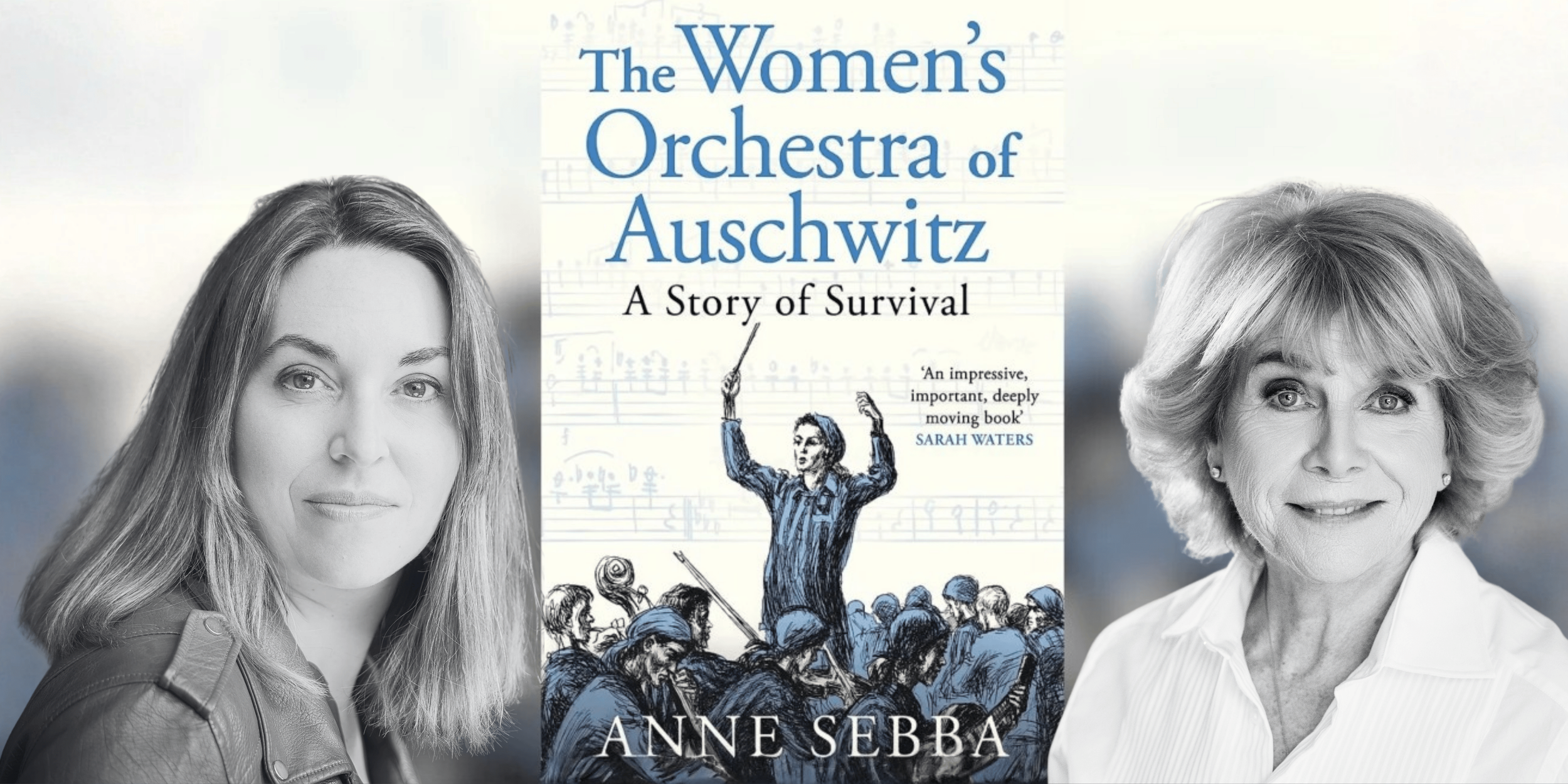 Image 1 of 2
 Image 2 of 2